05 / Slow travel
Plan less rush.
Leave more room.
A wellness escape should make life simpler, not give you a second job arranging it. Start with the journey, the budget and one thing you’re really looking forward to.
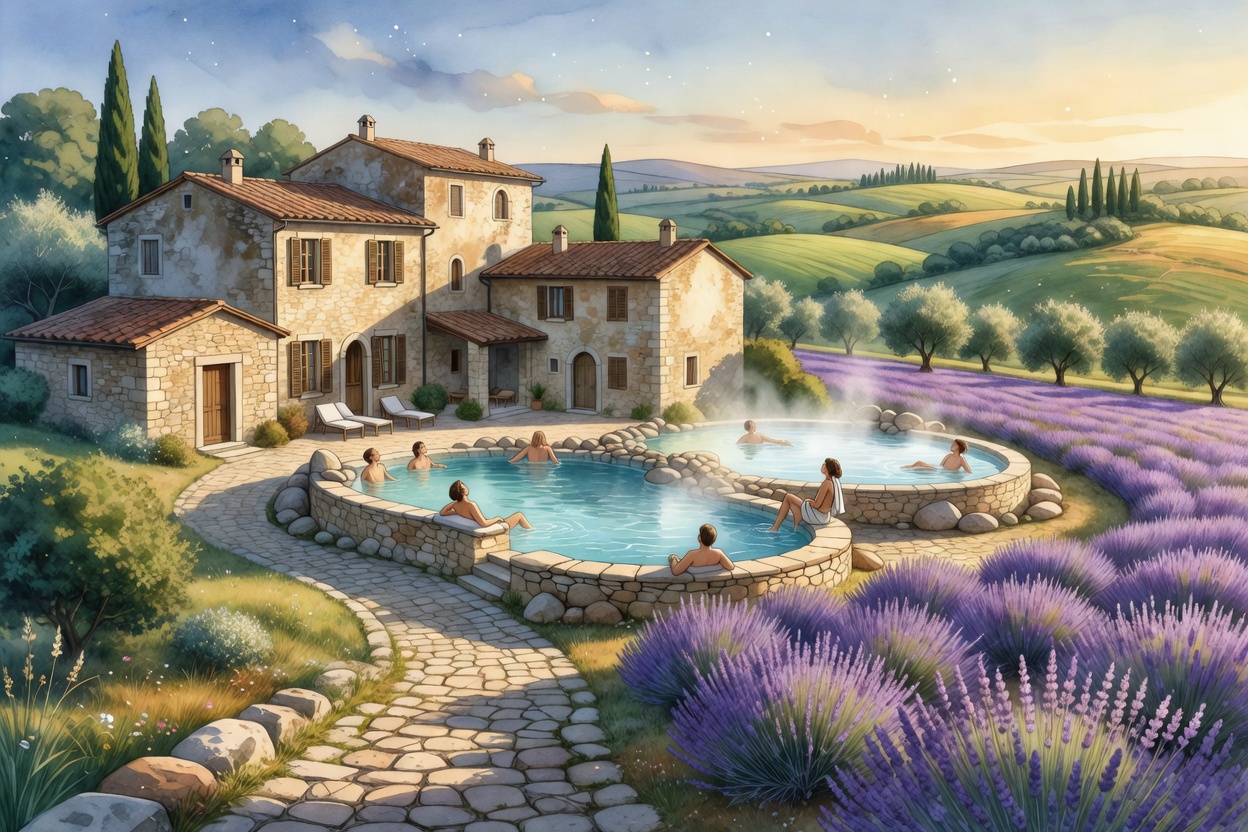
Illustrative photography; research your chosen destination separately.
Choose a setting you can reach gently
A thermal town suits travelers who want bathing and short walks without much planning. An Alpine retreat adds mountain scenery and often higher costs. A Mediterranean spa offers coastal downtime, while a Nordic city can combine public sauna with excellent everyday transport.
Compare door-to-door travel time, not just the flight. Add airport transfers, check-in time, onward trains and the final journey to your hotel. For two nights away, a direct train or short flight with a straightforward transfer often beats a remote “perfect” property.
Budapest can work for a city-and-baths introduction; Baden-Baden has rail access via its station and a local transfer into town. Helsinki suits sauna-focused travel. Rural Alpine or coastal properties need closer checking of bus frequency, seasonal shuttles and late-arrival options.
Build a budget you can actually compare
Separate transport, accommodation, meals, bathing admission and treatments. A cheap room becomes less cheap if you need taxis to the spa twice a day. Equally, you don’t need a luxury hotel when a comfortable guesthouse is a short walk from public baths.
- Accommodation: roughly €90–€180 per room/night for a comfortable mid-range base in many destinations.
- Bathing or sauna: often €20–€60 per person per visit.
- A 50–60-minute treatment: commonly €60–€130, with premium hotels charging more.
- Food and local transport: allow around €40–€75 per person/day, depending on destination and dining style.
For two people sharing a €140 room for two nights, two €35 bathing visits each, one €90 treatment each and €50 daily per person for food and local transport over three days, the total is about €900 for two. Add travel to the destination, taxes, extras and a contingency. Solo travelers carry the room cost themselves.
Match the season and length of stay
Two nights can deliver a useful pause with short travel. Three or four nights give you a fuller day without arrival or departure pressure. Longer retreats make sense when you want a specific program, not simply because the brochure recommends a week.
Winter makes thermal water and sauna especially appealing, but Alpine school holidays can be expensive. Spring and autumn often balance comfortable walking weather with calmer facilities. Coastal summer peaks bring heat and crowds; winter coastal stays may have limited restaurants or closed outdoor pools.
Check daylight, public holidays and maintenance dates. “Open year-round” doesn’t mean every facility operates every day.
A realistic starting point
3-day wellness escape
- Day 1 — Arrival + thermal bathingTravel, check in and eat something. If you feel rested and have time, enjoy a short bathing visit. Keep it optional when transport runs late. Finish with a simple dinner and an early night.
- Day 2 — Treatments + sauna + slow afternoonChoose one main treatment, with a sauna visit only if suitable and compatible with your therapist’s advice. Leave generous breaks between activities. Have lunch, take an easy walk and keep the afternoon mostly open.
- Day 3 — Morning wellness + relaxed departurePick gentle stretching, a short swim or a walk. Allow enough time for breakfast, drying off, packing and transfers. A rushed final morning has a talent for undoing the mood.
Book the essentials. Protect the gaps.
Reserve accommodation and your one must-have appointment first. Confirm pool access, textile rules, age restrictions and accessibility. If a package includes treatments, request actual appointment times before assuming your itinerary works.
Read room, treatment and transport cancellation policies separately. Check deposit deadlines, no-show charges and whether a package is refundable in parts. Travel insurance may cover specific disruptions, but exclusions and pre-existing-condition rules matter. A European health card, where applicable, isn’t a substitute for insurance.
Avoid stacking a vigorous workout, several heat rounds and multiple treatments into one day. You’re buying breathing space, not collecting attendance stamps.
Good to know
Pack for ordinary comfort.
Bring swimwear, sandals, a wet bag, comfortable layers, walking shoes, a refillable bottle, travel documents and medication. Check towel and robe provision before filling your suitcase.
Eat regular meals and drink water; restrictive “detox” plans aren’t necessary for a restful trip. Avoid alcohol around heat experiences. Keep a free hour after treatments where possible, and ask a clinician about activities if you have relevant health concerns. The unscheduled parts are still part of the plan.