04 / Rest day
Modern wellness centers
You don’t need a week away to make room for yourself. Sometimes a good treatment and an unhurried afternoon are plenty.
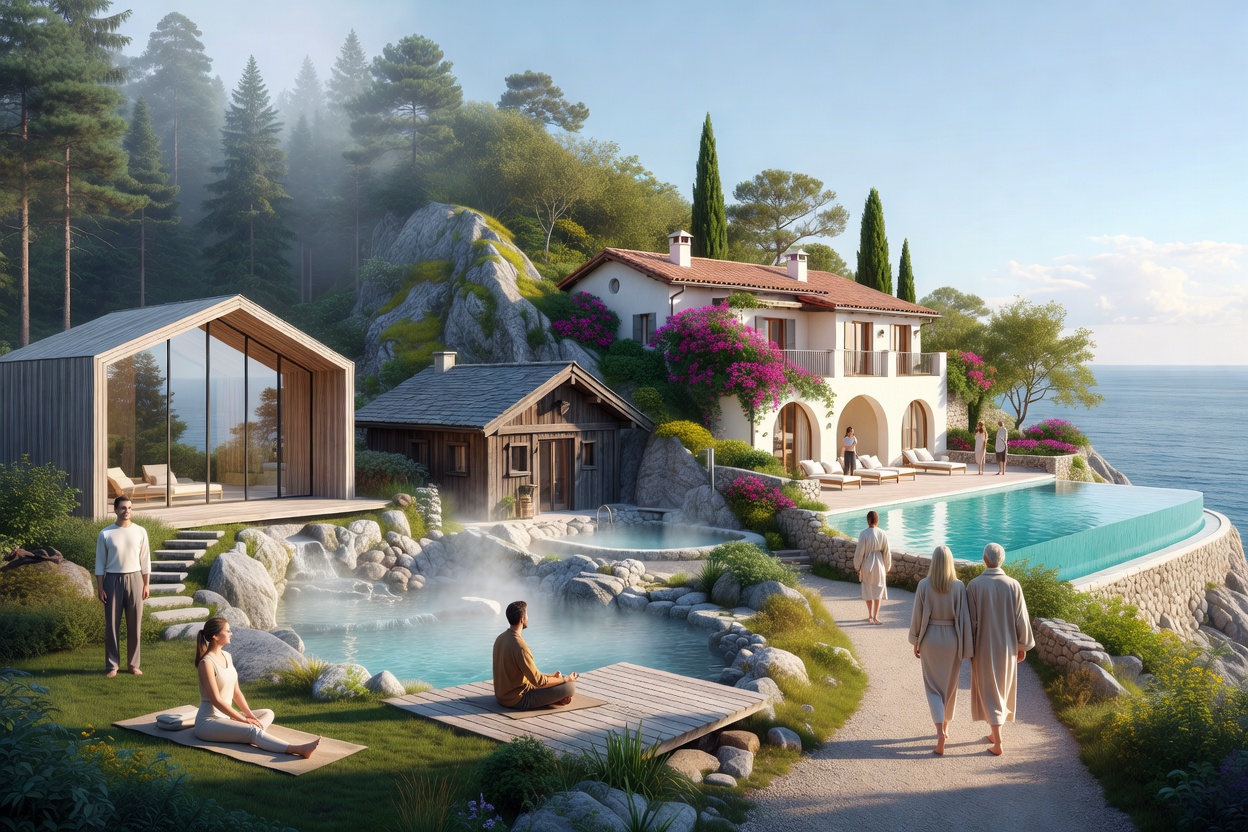
Illustrative photography, not a facility listing.
What’s behind the wellness label?
“Wellness center” is a broad description, not a consistent quality standard. It might mean a small treatment studio, a hotel pool with a steam room, or a large complex with gyms and bathing circuits. Compare actual facilities rather than the confidence of the brochure.
Urban centers in cities such as Copenhagen, Vienna and Lisbon make it easy to add rest to an ordinary city break. The best choice may be a short walk from your accommodation. Crossing town twice can rather undo the quiet afternoon.
Four formats, different strengths
| Format | What you’ll find | Typical price | Check first |
|---|---|---|---|
| Day spa | Massage, facials, perhaps a relaxation lounge | €60–€130 per treatment | A pool may not exist |
| Hotel spa | Treatments, changing rooms, pool or heat facilities | €40–€100 day pass | Non-resident access and swim hours |
| Thermal center | Warm-water pools, jets, optional sauna zones | €20–€65 admission | Time limits and included zones |
| Recovery-focused wellness center | Guided mobility, compression or specialist recovery services | €25–€80 per session | Staff qualifications and suitability screening |
Day spas are focused and convenient, but you may have nowhere to linger. Hotel spas offer more atmosphere, though guest priority can restrict access. Thermal centers provide variety but can be lively. Recovery studios suit specific interests, yet a technical-sounding menu isn’t evidence that every service will help you.
Translate the treatment menu
A relaxation massage usually uses lighter-to-moderate pressure and a whole-body approach. Deep-tissue work applies more targeted pressure; it shouldn’t be an exercise in tolerating pain. Tell the therapist what feels comfortable and mention injuries or relevant conditions during the consultation.
Facials commonly include cleansing, exfoliation, a mask and moisturizing. Ask about active ingredients, fragrance and sun sensitivity, especially before a coastal afternoon. Strong peels and procedures that break the skin belong in a different decision category from a simple spa facial.
Hydrotherapy means using water in a structured way. In a leisure center, that might be jets, bubble benches or a warm pool. Clinical hydrotherapy with a qualified professional is different. Check what a venue actually provides rather than assuming supervision is included.
Recovery spaces may offer stretching, compression boots or cold-water sessions. Benefits and risks depend on the service and your circumstances. Ask who supervises, whether a health screening is provided and what evidence supports any specific claim.
What a day visit feels like
Arrive around 15–20 minutes before your appointment unless instructed otherwise. You may complete a short consultation, change into a robe and meet your therapist. Ask whether the advertised duration includes this preparation.
Afterward, you might use a relaxation room or return directly to reception. A lounge, pool and gym aren’t automatic inclusions. Check whether fitness classes require booking and whether the “relaxation area” is genuinely separate from busy circulation routes.
Bring swimwear if there’s a pool, sandals, your water bottle and basic toiletries. Confirm towel and robe rental. Leave valuables at your accommodation where practical, and ask about secure lockers rather than assuming they’re provided.
Passes, memberships and hidden extras
A day pass buys access, not necessarily a treatment. A treatment booking may include only the treatment. Bundles can be good value when you’ll use every part, but don’t pay for a gym session just because it makes the package sound complete.
Memberships make more sense for repeat local visits than a short holiday. Check joining fees, minimum terms, guest access, pause rules and cancellation notice. A multi-visit pass may expire sooner than you expect.
Compare hygiene, therapist credentials, accessibility, available appointments and cancellation terms alongside price. Ask about lift access, treatment-table height and accessible changing facilities directly if these matter to you.
Good to know
Quiet is something you can ask about.
Weekday mornings are often calmer than weekends, but hotel family-swim hours can change the picture. Rainy days and winter breaks increase demand for indoor facilities; summer may bring maintenance closures. Ask when the space is quietest and whether any major facilities will be unavailable. A smaller, well-run center can beat a very impressive list of closed rooms.