03 / Sauna culture
A warmer welcome to sauna.
You don’t have to love icy water or sit on the highest bench. Start gently. The point is to feel comfortable, not impressive.
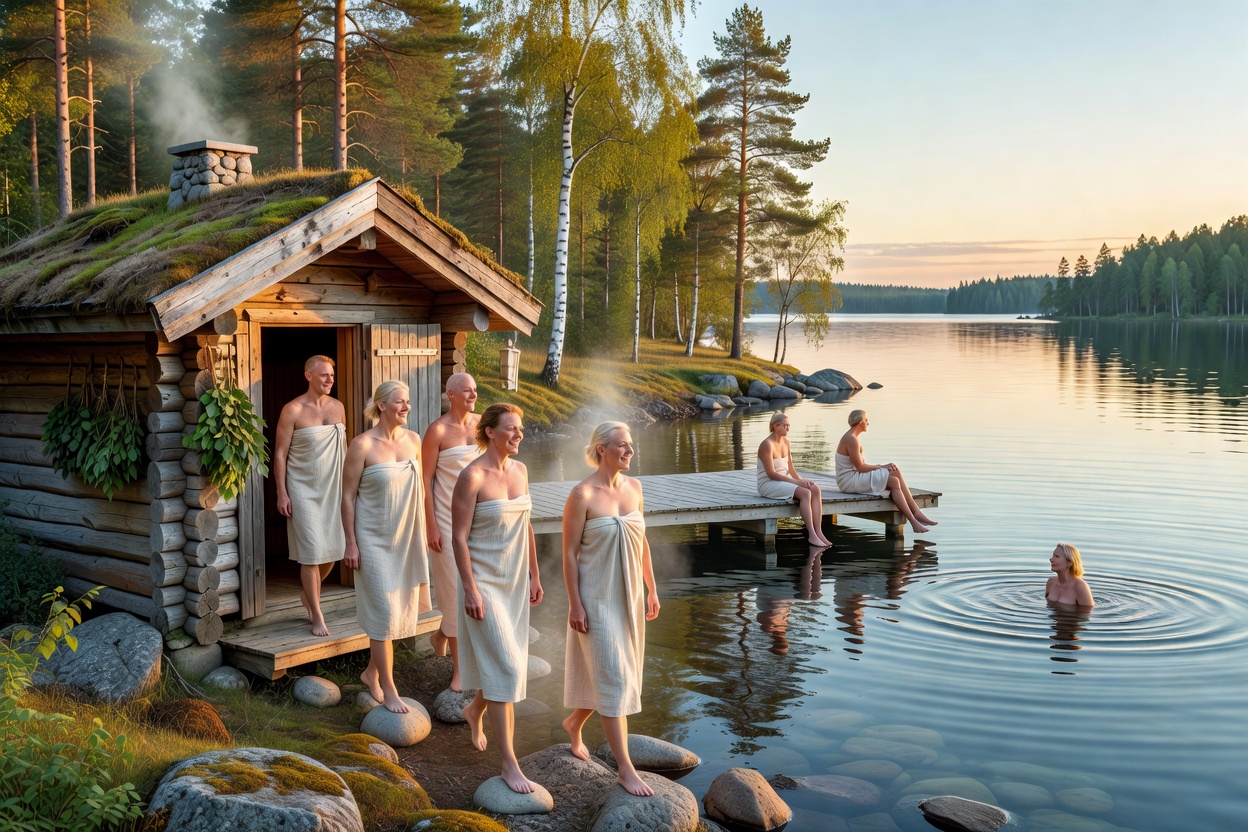
Illustrative photography; facilities vary by venue.
More everyday ritual than performance
In Finland, sauna is woven into ordinary life: homes, swimming halls, lakeside cabins and public waterfront venues. It can be quietly social rather than ceremonial. The Finnish word löyly describes the steam and heat released when water is ladled onto hot sauna stones.
Across the Nordic region, you’ll find different combinations of heat, outdoor air and water. A Swedish lakeside sauna, Norwegian floating sauna and Finnish neighborhood sauna won’t share every rule. Read the venue’s instructions instead of treating “Nordic” as one universal etiquette.
Not all heat feels the same
A traditional Finnish-style sauna often runs around 70–100°C, with relatively dry air between water being added. Higher benches are generally hotter. These are descriptive temperatures, not targets for a beginner.
A steam room usually sits around 40–50°C with very high humidity. It may sound milder, but humid air makes it harder for sweat to evaporate. Some people find it more intense than a dry sauna.
An infrared cabin warms the body with radiant heat and commonly operates around 40–60°C. Experiences and equipment vary. A lower air temperature doesn’t make it suitable for everyone, and broad “detox” claims deserve skepticism.
Public sauna entry might cost €10–€30; design-led waterfront venues often charge €20–€45 for a timed visit. Private sauna hire can be €60–€180+ per hour for a group. Infrared appointments commonly cost €20–€50. Confirm towels, swim access and changing time.
Your first visit, without the guesswork
Arrive early enough to understand the layout. Shower, dry off if instructed and choose a lower bench near an easy exit. Start with just a few minutes—perhaps three to five—and leave sooner if you need to. Venue limits are ceilings, not goals.
Some experienced visitors stay around 10–15 minutes, but there’s no universal safe duration. Temperature, humidity, medication and individual health all matter. Leave immediately if you feel dizzy, weak, nauseated, unusually breathless or have a racing heart.
Cool down gradually afterward and sit somewhere comfortable. A lukewarm or cool shower is enough. Cold plunges are optional and can cause a sudden cardiovascular response; don’t jump into unfamiliar water or plunge alone. Rest until you feel fully comfortable before deciding whether to return.
The relaxation area isn’t an afterthought. It gives you space to settle, sip water and notice how you feel. One short round followed by a long rest is a complete sauna visit.
The etiquette people actually care about
- Check clothing rules before booking. Mixed public Finnish venues may require swimwear; many German and Austrian sauna zones are textile-free.
- Use a clean sitting towel where required. In many dry saunas, all skin—including feet—should be on your towel.
- Ask before adding water to stones. Never add oils or other substances unless staff explicitly permit it.
- Close the door promptly. Keep conversation low and leave phones outside.
- Respect privacy. No photography in changing, bathing or sauna spaces without explicit permission.
Bring a water bottle, sandals for wet areas, a towel and swimwear if required. A second towel helps with drying. Sauna hats are optional accessories, not essential beginner equipment. Remove jewelry that may become hot, and leave valuables in a locker.
Public or private? Winter or summer?
Public saunas are usually better value and offer a glimpse of local routines. The trade-offs are shared space, fixed sessions and less control over heat. Private hire gives your group privacy and flexibility, but costs more and still requires clear safety instructions.
Winter brings a memorable contrast between warm interiors and cold air. Pack easy-to-slip-on warm layers and watch for ice. Summer offers long Nordic evenings and gentler outdoor resting, although popular lakeside and city venues can book up quickly.
Good to know
Hydration first. Competition never.
Drink water before and after, avoid alcohol and don’t use sauna when unwell or dehydrated. If you’re pregnant, have cardiovascular or blood-pressure problems, or take medication affecting heat tolerance, ask a qualified clinician first. Children need venue-specific rules and close supervision. You can always skip heat and enjoy the rest area instead.